


Furnace Blowing Cold Air? 7 Causes & Real Fixes
Few things are more frustrating on a cold winter day than turning on your heating system only to feel cold air blowing through your vents. While a furnace blowing cold air is a clear sign that something is amiss, it does not always mean you need an expensive replacement. In many cases, the issue stems from a simple thermostat setting, a dirty air filter, or a safety lockout triggered by restricted airflow.
Understanding how your heating system operates can help you quickly troubleshoot the problem, perform safe DIY fixes, and know when to call a professional. Below is a breakdown of the 7 most common causes of a furnace blowing cold air, along with real fixes to restore warmth to your home.
Quick Diagnostic: Why Is Your Furnace Blowing Cold Air?
Cause / Issue | Primary Symptom | Fix / Solution |
Thermostat Fan Setting | Fan runs continuously even when not heating | Switch thermostat fan setting from "ON" to "AUTO" |
Clogged Air Filter | Restricted airflow; furnace shuts off mid-cycle | Replace dirty air filter to restore proper airflow |
Dirty Flame Sensor | Burners ignite briefly, then shut off after seconds | Clean oxidized flame sensor or replace if worn |
Igniter / Pilot Failure | Furnace clicks or attempts to start, but no flame lights | Relight pilot light or replace worn hot surface igniter |
Overheating / Limit Switch | Blower runs continuously while heat exchanger cools | Replace filter, clear vents, and allow system reset |
Clogged Condensate Line | Water pools near unit; safety float switch trips | Flush clogged condensate trap and PVC drain line |
Ductwork Leaks / Tears | Furnace generates heat, but cold air pulled into ducts | Seal unconditioned air leaks or reconnect ducting |
7 Common Causes of a Furnace Blowing Cold Air (and Real Fixes)
Identifying the root cause of chilly airflow requires evaluating both electrical and mechanical furnace components.
1. Thermostat Fan Set to "ON" Instead of "AUTO"
When your thermostat fan setting is set to "ON", the blower fan runs continuously 24/7, even when furnace burners are off. Between heating cycles, the fan blows unheated room-temperature air through your vents.
The Fix: Check your thermostat and switch the fan setting to "AUTO". This ensures the blower fan only runs when the furnace actively heats air.
2. Clogged or Dirty Air Filter
A heavily clogged air filter restricts airflow across the furnace heat exchanger. Deprived of adequate air movement, internal temperatures spike, triggering the high-limit safety switch to shut off the burners. The blower fan keeps running to cool the unit down, pushing cold air into living spaces.
The Fix: Turn off power to the furnace and replace the dirty filter with a fresh, properly sized filter. Allow the furnace to cool before restarting.
3. Dirty or Oxidized Flame Sensor
The flame sensor is a metal rod that sits in front of the burner flame to confirm gas has ignited safely. Over time, carbon buildup coats the sensor, preventing it from detecting the flame. When this occurs, the control board shuts off gas flow as a safety precaution.
The Fix: Turn off electrical power and gas supply. Remove the flame sensor rod and polish off carbon buildup using fine steel wool or emery cloth. Reinstall and test ignition.
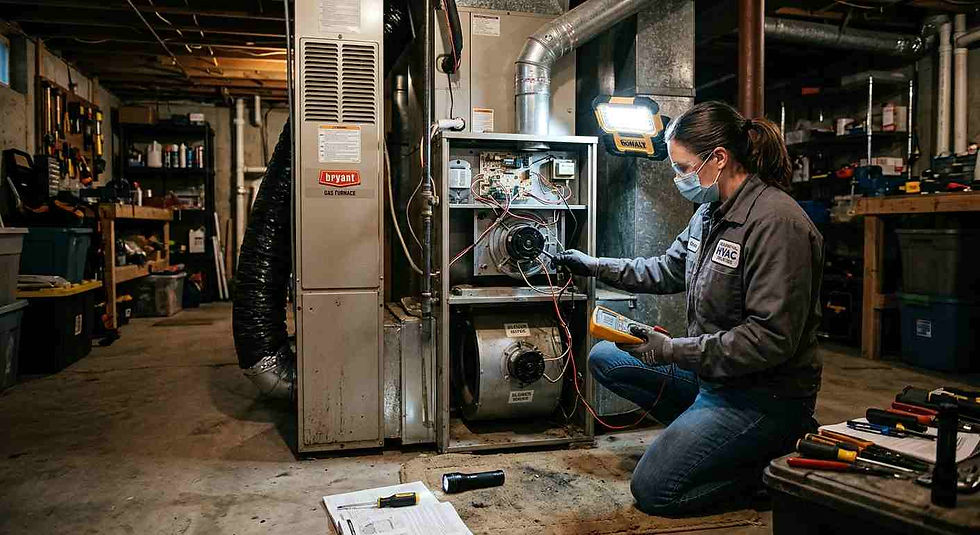
4. Faulty Hot Surface Igniter or Extinguished Pilot Light
Older furnaces rely on a standing pilot light, while modern high-efficiency units use an electronic hot surface igniter. If a pilot goes out or an electronic igniter cracks, the furnace cannot ignite gas to produce heat.
The Fix: For older units, follow manufacturer instructions to relight the pilot. For modern systems with a damaged igniter, schedule a professional furnace repair service.
5. Tripped High-Limit Safety Switch
Your furnace contains limit switches designed to prevent fire hazards if internal temperatures rise above safe limits. Overheating caused by closed supply registers or blocked return vents trips the limit switch, cutting fuel supply while keeping the fan running.
The Fix: Ensure all supply registers and return vents throughout your home are open and unblocked. If the limit switch continues to trip, a technician must inspect the blower motor and heat exchanger.
6. Clogged Condensate Line (High-Efficiency Furnaces)
High-efficiency condensing furnaces produce moisture during combustion. If the condensate drain line or trap becomes clogged with sediment, a safety float switch trips to prevent water overflow, shutting down burners while allowing the fan to blow cold air.
The Fix: Inspect the clear plastic tubing and PVC drain line connected to your furnace. Flush debris using warm water and vinegar or clear obstructions with compressed air.
7. Leaky or Disconnected Ductwork
If your furnace produces heat at the unit but room vents blow cold air, ductwork in unconditioned spaces (such as basements, attics, or crawlspaces) may be disconnected or leaking. Cold air is drawn into the airflow stream before reaching living rooms.
The Fix: Inspect accessible duct runs for gaps or disconnected joints. Professional ductwork inspection and repair seals leaks and restores balanced airflow.
When to Call an HVAC Professional
While checking thermostat settings, changing filters, and flushing condensate lines are easy DIY tasks, complex gas or electrical issues require professional expertise. Call a certified technician if:
You smell gas or sulfur odors near the furnace (evacuate immediately and contact emergency gas services).
The furnace short-cycles repeatedly without heating.
Polishing the flame sensor or replacing filters does not restore heat.
You wish to upgrade outdated controls via smart thermostat installation options.
Preventing Heating Failures with Annual Maintenance
The most effective way to avoid unexpected breakdowns during winter is preventative care. Annual tune-ups inspect electrical connections, clean burners, inspect heat exchangers, and optimize system efficiency.
Enrolling in comprehensive annual furnace maintenance extends equipment lifespan and keeps utility bills low. If your current furnace is over 15 years old, evaluate potential savings using an HVAC SEER and efficiency savings calculator or explore modern furnace replacement options.
Utility Rebates and Flexible Financing
Upgrading an aging furnace to a high-efficiency heating system qualifies for energy-efficiency incentives. Review current heating rebates and incentives to offset upgrade costs. Additionally, flexible HVAC financing options allow you to manage installation costs with affordable monthly installments.
Restore Warmth and Safety to Your Home
Don't spend another cold day troubleshooting a furnace blowing cold air. Whether you need an emergency repair, routine tune-up, or full system assessment, expert help is available.
Ready to fix your heating system? Contact our licensed heating experts today to schedule a diagnostic inspection or receive a free estimate on system repairs and upgrades.


Comments