


Carbon Monoxide & Your Furnace: The Ultimate 2026 Homeowner’s Safety Guide
Introduction: Understanding the Silent Danger in the Basement
When freezing winter temperatures drop down across Southern Ontario, your home's utility room undergoes a massive transformation. It goes from a quiet storage space to the active engine room of your family's daily comfort. Your gas furnace kicks on thousands of times throughout the season, burning fuel to create a steady shield of indoor warmth. Yet, every single time a gas-fueled combustion appliance activates, it operates as a controlled chemical fire. If that fire isn't managed with absolute structural precision, it can quickly turn into your home's most severe hidden hazard.
The hazard we are talking about is Carbon Monoxide (CO). Frequently referred to by medical professionals and emergency crews as the "silent killer," carbon monoxide is a highly volatile toxic gas. Because it is completely colorless, completely odorless, and completely tasteless, it is impossible for human senses to detect its presence. You cannot see it floating through your living room, you cannot smell it seeping out of your floor vents, and you cannot taste it as it fills your bedroom air.
In 2026, the intersection of home mechanical systems and toxic gas management has reached a critical turning point. Changes to provincial fire safety regulations, an aging housing stock across mature Hamilton neighborhoods, and strict code enforcement by the TSSA (Technical Standards and Safety Authority) mean that understanding carbon monoxide safety is no longer optional. It is a vital safety requirement for every homeowner.
Whether your system is running flawlessly or you want to understand the exact link between mechanical failures and toxic leaks, this guide provides essential data. We will dive deep into the chemical physics of carbon monoxide creation, identify the core mechanical failures that cause gas leaks, outline the latest 2026 Ontario safety laws, look closely at symptom recognition, and detail how to protect your household from unexpected mid-winter emergencies.
1. The Chemical Physics: Why Do Furnaces Produce Carbon Monoxide?
To understand how carbon monoxide becomes a threat, we first have to examine the chemical process of burning natural gas inside your furnace's burners.
Complete Combustion vs. Incomplete Combustion
Natural gas consists almost entirely of methane (CH4). When your furnace runs under ideal factory conditions, it achieves complete combustion. This means the gas mixes perfectly with an abundant supply of fresh oxygen (O2) from the outside air. When the igniter fires, the carbon and hydrogen atoms break apart and bond seamlessly with the oxygen, creating safe, harmless byproducts: water vapor (H2O) and carbon dioxide (CO2).
However, if the system's airflow is restricted, if the burners are dirty, or if the gas valve delivers incorrect manifold pressure, the flame suffers from a lack of oxygen. This triggers incomplete combustion. Because there aren't enough oxygen atoms to form safe carbon dioxide, the chemical reaction stalls, leaving behind highly toxic carbon monoxide (CO) molecules instead.
Complete Combustion:Incomplete Combustion:Methane (CH4)+2O2⟶Carbon Dioxide (CO2)+2H2O2CH4+3O2⟶2Carbon Monoxide (CO)+4H2O
Every single gas furnace—even a top-tier model installed yesterday—produces a trace volume of carbon monoxide within its combustion flames. Under normal operation, this toxic gas is safely sealed inside the internal heat exchanger tubes and pushed straight out of your home through a plastic wall flue or brick chimney liner. The danger only arises when a mechanical failure breaks that containment loop, allowing the gas to mix with the clean air blowing through your home's ductwork.
2. The Primary Suspect: The Cracked Heat Exchanger
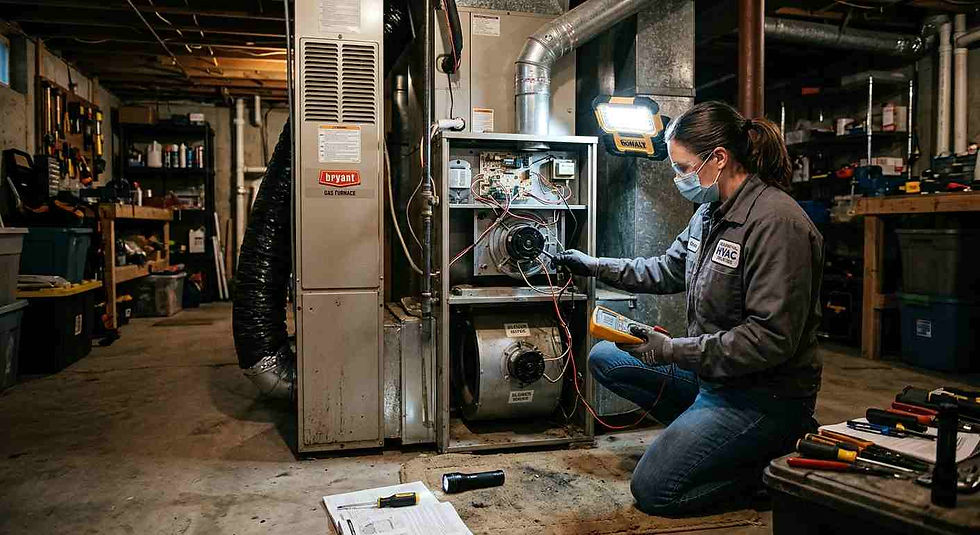
When a licensed technician inspects a furnace for carbon monoxide leaks, they focus almost entirely on a single, critical component: the heat exchanger.
                  THE HEAT EXCHANGER CONTAINMENT LOOPS

   [Combustion Flames] ---> INSIDE SEAMLESS METAL TUBES ---> Exhaust Vented Safely
                                    |
                    (Microscopic Cracks/Rust Holes Open)
                                    v
     [Indoor Home Air]    <--- TOXIC CO LEAKS MIX IN <--- Chased into Floor Registers
The heat exchanger consists of a series of coiled metal tubes inside your furnace cabinet. Think of it as a solid structural wall that keeps toxic gases completely separate from your household breathing air.
The Process: The flames burn entirely inside these hollow metal tubes, heating up the metal walls. Your heavy indoor blower fan pushes cool house air over the outside of these hot metal tubes. The air absorbs the heat from the metal and travels back up through your registers as safe, warm air.
The Failure: Over fifteen to twenty years of operation, these metal tubes endure severe thermal stress. They expand dramatically every time the furnace turns on and contract tightly every time it shuts off. Over time, this constant flexing causes the metal to fatigue. If your system filters aren't regularly changed, the internal temperatures rise too high, speeding up rust and causing microscopic cracks or seam separations to open up in the metal.
The moment a crack opens in a heat exchanger, the barrier is broken. The heavy indoor blower fan creates higher air pressure on the outside of the tubes than the draft fan creates on the inside. This pressure difference can push raw carbon monoxide directly into the stream of air entering your living rooms, turning your furnace into a toxic gas distributor. If you expect your system might be dealing with a cracked core, you must call an emergency furnace repair crew to handle the hazard before turning the heating loop back on.
3. Secondary Causes of Carbon Monoxide Leaks
While a cracked heat exchanger is the most common cause of a leak, several other critical mechanical and structural factors can cause carbon monoxide to build up inside an Ontario home:
Blocked Exhaust Venting Flues: In modern high-efficiency condensing furnaces, exhaust gases exit through white or grey plastic PVC pipes protruding from the side wall of your home. During heavy Hamilton winter storms, drifting snow, falling leaves, or nesting birds can completely block these exterior vent openings. If the exhaust pathway is blocked, toxic combustion gases cannot escape and will back-draft directly into your utility room.
Improper Venting Slope and Condensate Blockages: High-efficiency furnaces create an acidic water byproduct during combustion. The venting pipes must be installed with a precise upward slope back toward the unit so this water can drain safely away. If the pipes sag or a drain line plugs, water will pool inside the vent, blocking the exhaust path and forcing toxic fumes back into the basement.
Inadequate Combustion Air (Appliance Suffocation): If you build a tight, unvented utility closet around a gas furnace to hide it away during a basement renovation, you can suffocate the system. Without an adequate supply of fresh intake air, the burners cannot find enough oxygen to achieve clean combustion, resulting in a sudden spike in carbon monoxide production.

4. The 2026 Ontario Fire Code Laws: Mandatory Protection Requirements
Because carbon monoxide is entirely undetectable by human senses, the Ontario government enforces strict mandatory rules to protect families from accidental poisonings.
The Multi-Storey Alarm Mandate
Under current updates to the Ontario Fire Code, every single residential dwelling that contains a fuel-burning appliance or an attached garage must have a working carbon monoxide alarm installed on every storey of the building.
Previously, many homeowners assumed that placing one basic alarm outside the main basement utility door was sufficient. In 2026, that is a direct violation of provincial safety laws. If you own a two-story home with a basement, you must have a minimum of three active, certified CO alarms—one in the basement, one on the main floor, and one directly outside your second-story bedrooms.
Legal Placement Criteria
To ensure your alarms can effectively protect your family, follow these precise physical placement criteria:
Proximity to Sleeping Areas: An alarm must be located within 5 meters (16 feet) of every bedroom door, positioned closely enough that the audible siren can easily wake a sleeping adult through a closed door.
Avoid Corners and Dead-Air Zones: Do not mount a CO alarm directly in corners, next to drafty windows, or right beside an HVAC supply register. The rapid moving air can skew the sensor's readings.
Height Matrix: Unlike smoke detectors (which must be mounted on the ceiling because smoke rises), carbon monoxide is roughly the same weight as normal atmospheric air and distributes evenly through a room. Therefore, CO alarms can be plugged into standard wall outlets or mounted at any height on your walls.
5. The TSSA Inspection Protocols: What Happens During a Safety Audit
The Technical Standards and Safety Authority (TSSA) is the strict regulatory body that governs fuel safety in Ontario. When a licensed technician enters your property to perform an annual furnace maintenance tune-up, they are acting as an authorized safety inspector under provincial law.
If a technician uses a digital combustion analyzer and registers high levels of carbon monoxide leaking from your heat exchanger, they are legally required to execute the TSSA Red Tag Protocol:
+-----------------------------------------------------------------+
|                    THE TSSA RED TAG SAFETY LADDER               |
+-----------------------------------------------------------------+
|  "A" TAG (Immediate Hazard):   Gas Line Closed & Locked Instantly|
|  "B" TAG (Code Non-Compliance): 15-45 Day Warning to Fix Issue  |
+-----------------------------------------------------------------+
The "A" Tag Execution: If the leak poses an immediate danger to your family, the technician will issue an "A" tag. They will physically shut off the gas valve leading to the appliance, disconnect the power wires, and apply a high-visibility warning tag. You cannot legally turn the fuel back on until the entire core hazard is completely fixed or a full furnace replacement is completed.
The "B" Tag Execution: If the system is currently safe but violates a specific safety code—such as improper clearance distances or degraded venting pipes—the technician will issue a "B" tag. You are given a strict 15 to 45-day window to hire a professional contractor to correct the violation before Enbridge steps in to shut off the gas service to your entire property.
6. Recognizing Carbon Monoxide Poisoning Symptoms
Understanding how to spot the physical symptoms of low-level carbon monoxide exposure is your final line of defense if your electronic detectors ever fail. Because the symptoms closely mimic common winter conditions like the seasonal flu or a head cold, many families misdiagnose the warning signs until severe damage has occurred.
+-----------------------------------------------------------------+
|                 CARBON MONOXIDE POISONING SYMPTOMS              |
+-----------------------------------------------------------------+
|  LOW EXPOSURE:     Dull Headaches, Dizziness, Nausea, Fatigue   |
|  MODERATE LEVEL:   Confusion, Blurred Vision, Accelerated Pulse  |
|  HIGH LEVEL:       Loss of Consciousness, Seizures, Fatal Arrest |
+-----------------------------------------------------------------+
The Fluid Accumulation Tracker
Pay close attention to how your symptoms behave over time. If every member of your household suffers from dull headaches, mild nausea, and fatigue while inside the house, but those symptoms completely vanish within an hour of stepping outside into fresh air, you are likely dealing with low-level carbon monoxide exposure inside your home. Furthermore, if your family pets appear unusually lethargic or sick at the exact same time, treat the situation as an immediate environmental emergency.
7. Future-Proofing Your Home Comfort: The Shifting Balance Point
While regular system cleanings and proper alarm placement protect your family, many modern Ontario homeowners are completely rethinking their reliance on combustion heating to eliminate gas hazards entirely. The fastest-growing home renovation trend in 2026 is moving away from standalone gas systems and embracing the high-efficiency electric heat pump.
By installing an electric cold-climate heat pump or a smart dual-fuel hybrid system, you can drastically reduce your natural gas usage throughout the milder autumn and winter months, shielding your budget from the escalating carbon tax. Transitioning your property away from pure combustion heating unlocks substantial government rebates managed through green energy funds. Furthermore, looking into flexible financing options allows you to completely upgrade your home's infrastructure using predictable monthly payments that align smoothly with your utility savings.
Frequently Asked Questions (FAQ)
How often should I test my carbon monoxide alarms?
You should press the physical "Test" button on every CO alarm in your home once a month to verify the internal electronics and battery paths are functional. Additionally, replace the backup batteries once a year (autumn is the ideal time), and swap out the entire alarm assembly every 7 to 10 years based on the manufacture date stamped on the back of the casing, as the internal chemical sensors eventually expire.
Can a dirty air filter cause a carbon monoxide leak?
A dirty air filter cannot create carbon monoxide directly, but it can trigger the mechanical failures that cause a leak. A heavily clogged air filter completely chokes your system's airflow, trapping extreme heat inside the furnace cabinet. This excessive heat causes the metal tubes of your heat exchanger to expand past their safe limits, leading to early cracking and structural failure. Always check your filters every 30 to 90 days to keep your system protected.
What should I do immediately if my CO alarm sounds?
If an electronic CO alarm activates inside your home:
Do not waste time searching for the source or attempting to inspect the furnace cabinet yourself.
Evacuate every member of your family and all pets out of the house into fresh air immediately.
Call 911 or your local fire department from a safe distance outside the home. Emergency crews will arrive with advanced tools to check your rooms and safely clear the hazard.
Actionable Maintenance Checklist for Homeowners
To keep your family safe and your home heating system fully code-compliant, use this structured owner's roadmap:
[ ] Check Expiry Dates on All Alarms: Walk through your home, remove every CO detector from the wall, and check the expiration or manufacture date stamped on the back. Replace any units older than 7 years.
[ ] Inspect Your Exterior Vent Pipes: Walk outside and ensure your furnace plastic PVC exhaust lines are completely clear of heavy snowdrifts, garden brush, or storage items.
[ ] Test Electronic Batteries Seasonally: Replace the backup batteries in all alarms every autumn when you adjust your clocks.
[ ] Read Verified Local Trade Reviews: Check online customer reviews to find highly rated, TSSA-licensed technicians who specialize in combustion analysis and system safety.
[ ] Schedule Your Combustion Evaluation: Reach out to an expert team to schedule an annual safety inspection and get clear, custom quotes designed precisely for your home's layout.
Final Summary: Prioritizing Residential Safety and Awareness
Managing a combustion system inside an Ontario home requires a high level of consistent safety awareness. While modern natural gas furnaces are engineered with excellent electronic control boards and multi-stage safety switches designed to minimize operational risks, they cannot overcome the natural wear, rust, and metal fatigue that decades of high-heat thermal cycling create.
Carbon monoxide remains a highly serious environmental hazard, but it is a hazard that can be completely managed through proactive home care. By complying with the mandatory multi-storey alarm laws, insisting on comprehensive Manual J sizing calculations, recognizing the structural indicators of heat exchanger degradation, and strategically utilizing modern solutions like hybrid heat pumps, you can protect both your family's safety and your household budget.
Take the time to evaluate your active detectors, prioritize professional technical oversight, and always partner with fully accredited, licensed trade teams focused on the long-term safety and comfort of your home.
When you are ready to secure a comprehensive safety evaluation for your heating system, feel free to reach out to book an on-site audit and get customized quotes designed precisely for your property's mechanical layout.


Comments